Oral motor exercises aim to strengthen muscles crucial for swallowing and managing saliva, potentially reducing excessive drooling, as highlighted by global health initiatives.
These exercises, often found in PDF resources, are a non-invasive approach to improving oral control and addressing sialorrhea across various age groups.
What is Drooling (Sialorrhea)?
Drooling, clinically known as sialorrhea, refers to the involuntary leakage of saliva from the mouth. While common in infants – typically peaking between 4 and 19 months – persistent drooling beyond early childhood can indicate an underlying issue. It’s not merely a cosmetic concern; excessive saliva flow can lead to skin irritation, social challenges, and diminished quality of life.
Sialorrhea isn’t always caused by overproduction of saliva, but often by an inability to effectively manage normal saliva production. This can stem from weakened oral muscles, difficulty swallowing, or reduced awareness of oral secretions. Resources, including PDF guides on oral motor exercises, emphasize strengthening these muscles to improve control. Understanding the distinction between excessive saliva and impaired oral management is crucial for targeted intervention, as highlighted by recent WHO guidelines.
Why Address Drooling? – Impact on Quality of Life
Addressing excessive drooling significantly enhances an individual’s overall well-being. Beyond the physical discomfort of skin irritation and clothing dampness, sialorrhea can lead to social stigma and emotional distress, particularly in children and adults. It can impact self-esteem, participation in social activities, and even academic or professional performance.
Effective management, often involving oral motor exercises detailed in readily available PDF resources, aims to restore dignity and improve social inclusion. The World Health Organization recognizes oral health – including saliva management – as a key indicator of quality of life. Proactive intervention, guided by speech-language pathologists, can empower individuals to confidently engage in daily life, fostering a greater sense of independence and self-worth.

Understanding the Causes of Drooling
Drooling stems from various factors—developmental stages, neurological issues, or medical conditions—requiring tailored approaches, often detailed in oral motor exercise PDF guides.
Developmental Stages & Normal Drooling
Drooling is frequently observed and considered typical in infants, particularly between four and nineteen months of age, as they develop oral motor control. This phase involves learning to coordinate sucking, swallowing, and saliva management. However, persistent excessive drooling beyond four years warrants investigation.
Understanding these developmental milestones is crucial when considering oral motor exercises. PDF resources often categorize exercises based on age and skill level, starting with simple movements to build foundational strength. These exercises aren’t about stopping normal infant drooling, but addressing persistent issues later on. Early intervention, guided by a professional and utilizing resources like exercise PDFs, can support healthy oral motor development and potentially mitigate long-term challenges.
Neurological Conditions Associated with Drooling
Drooling, or sialorrhea, can be a significant symptom associated with various neurological conditions impacting muscle control and swallowing mechanisms. Cerebral palsy, stroke, Parkinson’s disease, and Amyotrophic Lateral Sclerosis (ALS) are frequently linked to excessive saliva production or difficulty managing it.
In these cases, oral motor exercises, detailed in many PDF guides, aim to improve muscle strength and coordination, assisting with swallowing and reducing drooling. These exercises aren’t a cure, but a supportive therapy. Accessing specialized PDF resources tailored to specific neurological conditions is vital. A speech-language pathologist can design a program, utilizing these exercises, to address individual needs and maximize functional outcomes.
Medical Conditions Contributing to Excessive Salivation
Beyond neurological factors, several medical conditions can contribute to excessive salivation, leading to drooling. These include gastroesophageal reflux disease (GERD), certain infections like tonsillitis, and even allergic reactions causing increased mucus production. Dental issues, such as ill-fitting dentures or mouth sores, can also stimulate saliva flow.
While addressing the underlying medical condition is paramount, oral motor exercises, often detailed in accessible PDF resources, can help manage the symptoms. These exercises strengthen oral muscles, improving swallowing and reducing drooling. Consulting a healthcare professional and utilizing PDF guides for targeted exercises is crucial for a comprehensive approach.
Medications and Drooling
Certain medications can have sialorrhea – excessive salivation – as a side effect. These include medications used to treat psychiatric conditions, like clozapine, and some medications for Alzheimer’s disease. Muscle relaxants and cholinergic medications can also increase saliva production, potentially leading to drooling.
If medication-induced drooling is present, discuss alternatives with a physician. Simultaneously, oral motor exercises, often outlined in readily available PDF guides, can help improve oral muscle control and manage saliva. These exercises, detailed in PDF resources, strengthen swallowing muscles, offering a complementary approach alongside medical management.

Oral Motor Exercises: A Comprehensive Approach
Oral motor exercises, detailed in accessible PDF guides, strengthen facial muscles, improving swallowing and saliva control—a key strategy for managing drooling effectively.
The Role of Oral Motor Exercises
Oral motor exercises play a vital role in addressing drooling by strengthening the muscles responsible for oral functions like swallowing and lip closure. Numerous PDF resources detail these techniques, offering structured programs for individuals of varying abilities.
These exercises aren’t simply about stopping saliva; they enhance overall oral awareness and control. Strengthening the lips, tongue, and cheeks improves the efficiency of swallowing, reducing the likelihood of saliva escaping the mouth. They can be particularly beneficial for those with neurological conditions impacting oral motor skills.
The goal is to improve muscle coordination and endurance, leading to better management of saliva production and a reduction in socially challenging drooling. Consistent practice, guided by a professional or utilizing detailed PDF guides, is key to achieving positive outcomes and improving quality of life.
Assessment Before Starting Exercises
A thorough assessment is crucial before initiating any oral motor exercise program, often outlined in comprehensive PDF guides. This evaluation, ideally conducted by a Speech-Language Pathologist, identifies the specific muscles contributing to drooling and pinpoints areas of weakness or incoordination.
The assessment includes observing lip closure, tongue movement (protrusion, lateralization, and retraction), and jaw stability. It also considers swallowing function and the individual’s ability to manage saliva. Understanding the underlying cause of drooling – developmental stage or neurological condition – informs the exercise selection.
Detailed PDF resources often include checklists for self-assessment, but professional evaluation ensures a tailored program, maximizing effectiveness and preventing potential strain. Accurate assessment is paramount for safe and successful implementation.

Specific Oral Motor Exercises
Oral motor exercises, detailed in PDF guides, target lips, tongue, cheeks, and jaw to improve muscle strength and coordination for better saliva control.
Lip Exercises
Lip exercises are foundational in oral motor therapy, often detailed in PDF exercise guides, focusing on strengthening and improving lip closure. Lip Closure Exercises involve gently bringing lips together and holding the position, building endurance for containing saliva. These exercises combat drooling by enhancing the orbicularis oris muscle’s ability to prevent saliva leakage.
Lip Puckering Exercises, also found within these resources, require pursing the lips as if to kiss, improving lip rounding and control. Consistent practice enhances the lip’s seal, minimizing drooling. Both exercise types are typically performed several times daily, gradually increasing hold times as strength improves. Proper form, as illustrated in PDFs, is crucial for effectiveness and preventing strain.
Lip Closure Exercises
Lip closure exercises, frequently outlined in oral motor exercises for drooling PDF guides, are a cornerstone of therapy. Begin by gently bringing your lips together, aiming for a complete seal without straining. Hold this closure for a few seconds, gradually increasing the duration to 5-10 seconds as strength improves. Repeat this 10-15 times per session.
These exercises strengthen the orbicularis oris muscle, vital for controlling saliva. Visual aids within PDFs often demonstrate proper technique. Variations include adding slight resistance with a clean finger, or practicing closure after light lip stretches. Consistency is key; perform these exercises multiple times daily for optimal results, addressing the underlying muscle weakness contributing to drooling.
Lip Puckering Exercises
Lip puckering exercises, detailed in many oral motor exercises for drooling PDF resources, focus on strengthening the muscles used to tighten and round the lips. Initiate by gently puckering your lips as if to kiss, holding this position for 3-5 seconds. Repeat this action 10-15 times during each therapy session.
These exercises enhance lip strength and coordination, aiding in saliva control. PDF guides often include visual cues for correct form. Progress by increasing the hold time or adding gentle resistance. Consistent practice, several times daily, is crucial for building muscle endurance and reducing instances of drooling, addressing the root cause of the issue.
Tongue Exercises
Tongue exercises, frequently outlined in oral motor exercises for drooling PDF guides, are vital for improving oral motor control and reducing excessive saliva. These exercises target tongue strength, range of motion, and coordination, all crucial for effective swallowing. A variety of techniques exist, including protrusion, lateralization, and retraction, each designed to address specific muscle weaknesses.
PDF resources emphasize starting slowly and gradually increasing the intensity and repetitions. Consistent practice, guided by a speech-language pathologist, is key. Strengthening the tongue muscles helps improve bolus control and reduces the likelihood of saliva escaping the mouth, ultimately improving quality of life.
Tongue Protrusion Exercises
Tongue protrusion exercises, detailed in many oral motor exercises for drooling PDF documents, involve extending the tongue outwards as far as comfortably possible. This strengthens the tongue’s intrinsic and extrinsic muscles, improving its ability to initiate the swallowing process. Begin by simply sticking the tongue out, then progress to holding the protrusion for increasing durations – starting with a few seconds.
PDF guides often suggest varying the height of the protrusion (upward, downward, central) to target different muscle groups. These exercises are foundational for building overall tongue strength and control, contributing to better saliva management and reduced drooling. Consistency is paramount for noticeable improvements.
Tongue Lateralization Exercises
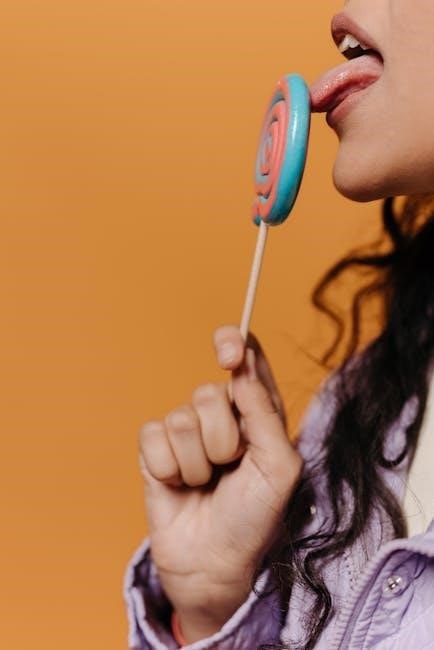
Tongue lateralization exercises, frequently outlined in oral motor exercises for drooling PDF resources, focus on moving the tongue from side to side within the mouth. This action strengthens the muscles responsible for controlling tongue movement, crucial for effectively clearing saliva. Start by attempting to touch the corners of the mouth with the tongue, alternating sides.
PDF guides often recommend increasing the speed and range of motion as strength improves. These exercises enhance the tongue’s ability to sweep saliva back into the mouth, preventing it from escaping. Regular practice, as detailed in these resources, is key to achieving better oral control and minimizing drooling episodes.
Tongue Retraction Exercises
Tongue retraction exercises, commonly detailed in oral motor exercises for drooling PDF guides, involve drawing the tongue backward into the mouth. This strengthens the muscles responsible for pulling the tongue back, aiding in swallowing and preventing saliva from pooling in the front of the mouth. Begin by gently attempting to touch the roof of the mouth with the tongue, gradually increasing the distance.
PDF resources emphasize maintaining a controlled movement and avoiding straining. Consistent practice, as illustrated in these materials, improves the tongue’s ability to effectively manage saliva and reduce instances of drooling. These exercises are vital for enhancing overall oral motor control.
Cheek Exercises
Cheek exercises, frequently outlined in oral motor exercises for drooling PDF documents, focus on strengthening the muscles within the cheeks. These muscles play a crucial role in containing saliva and assisting with chewing and swallowing. A common exercise involves holding air between the cheeks, like inflating balloons, and maintaining this puff for several seconds.

PDF guides often demonstrate variations, including alternating cheek puffs and controlled releases. Strengthening these muscles improves oral containment, reducing the likelihood of saliva escaping. Consistent practice, as detailed in these resources, contributes to better oral motor control and diminished drooling occurrences.
Cheek Puffing Exercises
Cheek puffing exercises, detailed in many oral motor exercises for drooling PDF guides, are foundational for strengthening the buccinator muscles. To perform this, individuals inflate their cheeks with air, creating a rounded appearance, and hold this position for approximately 5-10 seconds.
PDF resources emphasize maintaining a seal with the lips to prevent air leakage, maximizing muscle engagement. Repetitions are typically recommended, gradually increasing the hold time. This exercise enhances oral containment, reducing saliva spillage. Consistent practice, as illustrated in these guides, improves muscle tone and contributes to better control over saliva management, ultimately lessening drooling.
Cheek Retraction Exercises
Cheek retraction exercises, frequently outlined in oral motor exercises for drooling PDF materials, focus on strengthening the muscles that pull the cheeks inward. Individuals perform this by smiling widely while simultaneously attempting to pull the corners of their mouths towards their teeth, creating a hollowed-cheek appearance.
PDF guides often suggest holding this retracted position for 5-10 seconds, repeating several times. This exercise improves cheek muscle tone and enhances the ability to maintain a tighter oral seal. Strengthening these muscles aids in preventing saliva from escaping, contributing to reduced drooling. Consistent practice, as detailed in these resources, is key to achieving noticeable improvements.
Jaw Exercises
Jaw exercises, commonly detailed within oral motor exercises for drooling PDF guides, are vital for overall oral motor control and can significantly impact saliva management. These exercises aim to strengthen jaw muscles, improving coordination and stability during chewing and swallowing – processes directly linked to drooling reduction.
PDF resources typically recommend a range of movements, including controlled opening and closing, and side-to-side motions. Strengthening the jaw supports proper lip closure and tongue positioning. Consistent practice, as illustrated in these guides, enhances the efficiency of oral functions, minimizing saliva leakage and improving quality of life for individuals experiencing excessive drooling.
Jaw Opening and Closing Exercises
Jaw opening and closing exercises, frequently outlined in oral motor exercises for drooling PDF materials, are foundational for strengthening jaw musculature. These exercises involve slowly and deliberately opening the mouth as wide as comfortably possible, then gently closing it. Repetition builds endurance and control.
PDF guides often suggest adding slight resistance with a tongue depressor or hand for increased challenge as strength improves. Proper form is crucial; avoid jerky movements. Strengthening these muscles supports efficient chewing and swallowing, contributing to better saliva management and reduced drooling. Consistent practice, as detailed in these resources, is key to noticeable improvement.
Jaw Lateral Movement Exercises
Jaw lateral movement exercises, commonly detailed in oral motor exercises for drooling PDF guides, focus on side-to-side jaw motion. These exercises involve gently sliding the lower jaw to the right, then to the left, without rounding the lips or straining. The movement should be smooth and controlled, building coordination.
PDF resources often recommend visualizing a “U” shape with the jaw’s path. Resistance can be gradually added using a hand or tongue depressor. Strengthening these muscles improves chewing efficiency and bolus control, aiding in reducing excessive saliva production. Consistent practice, as outlined in these materials, is vital for optimal results.
Implementing an Exercise Program
PDF guides suggest starting slowly, with short sessions, and gradually increasing duration and complexity; consistency is key for noticeable improvements in oral motor control.
Frequency and Duration of Exercises
Oral motor exercise programs, often detailed in PDF resources from speech-language pathologists, typically recommend starting with short, frequent sessions. Initially, 5-10 repetitions of each exercise, performed 2-3 times daily, is a good starting point.
The duration of each session should be manageable, around 10-15 minutes, to avoid fatigue and maintain engagement. As strength and control improve, gradually increase the repetitions (up to 15-20) and the number of sessions per day (up to 4-5).
Consistency is paramount; regular practice yields better results than infrequent, lengthy sessions. Monitor for signs of fatigue – lip or jaw soreness – and adjust the program accordingly. Remember, individual needs vary, so tailoring the program is essential.
Progression of Exercises
Oral motor exercise progression, often outlined in detailed PDF guides, should be gradual and based on the individual’s response. Begin with easier variations of each exercise, focusing on proper form before increasing difficulty.
For example, start with assisted lip closure, then progress to unassisted. Increase resistance by adding a tongue depressor or using different textures. Introduce more complex movements, like alternating lip puckering and spreading.
Monitor for improvements in muscle strength, range of motion, and oral awareness. If an exercise becomes too easy, increase the repetitions, sets, or resistance. If it’s too challenging, regress to a simpler variation. A speech-language pathologist can guide this process effectively.
Making Exercises Fun and Engaging
Oral motor exercises, detailed in many PDF resources, can be more effective when presented as playful activities. Incorporate games like “blowing bubbles” for lip control or “animal faces” for varied movements.
Use rewards and positive reinforcement to motivate participation. Mirroring exercises – where you imitate the child – can also be engaging. Adapt exercises to the individual’s interests; for example, using flavored popsicles for tongue exercises.

Turn practice into a routine, but keep sessions short and frequent. A playful approach reduces frustration and encourages consistent participation, ultimately improving outcomes and adherence to the exercise plan.

Resources and Further Information
PDF guides with oral motor exercises are widely available online, alongside directories for finding qualified Speech-Language Pathologists, supporting global oral health.
Finding a Speech-Language Pathologist
Locating a qualified Speech-Language Pathologist (SLP) is crucial for personalized guidance with oral motor exercises. An SLP can accurately assess the underlying causes of drooling and develop a tailored program.
The American Speech-Language-Hearing Association (ASHA) provides a comprehensive directory to find certified SLPs in your area. Many offer specialized expertise in pediatric feeding and swallowing disorders, relevant to drooling management.
When selecting an SLP, inquire about their experience with oral motor therapy and their approach to addressing hypersalivation. Accessing PDF resources beforehand can help formulate informed questions during your initial consultation. Remember, a collaborative approach between the SLP, patient, and family is key to successful outcomes.
Online Resources for Oral Motor Exercises (PDFs)
Numerous online resources offer PDF guides detailing oral motor exercises for drooling management. These resources often provide visual aids and step-by-step instructions for various exercises targeting lips, tongue, and cheeks.
Websites of hospitals and rehabilitation centers frequently host downloadable PDFs created by Speech-Language Pathologists. Searching for “oral motor exercises for sialorrhea PDF” yields relevant results.
However, it’s vital to remember that these resources are general guidelines. A personalized program, developed with a qualified SLP, is always recommended. Use PDFs as supplementary material and always prioritize professional guidance for safe and effective implementation of exercises.
Global Oral Health Initiatives & Guidelines (WHO)
The World Health Organization (WHO) emphasizes oral health as integral to overall well-being, recognizing conditions like excessive salivation. While the WHO doesn’t specifically detail oral motor exercises for drooling in dedicated PDF guidelines, its broader focus on preventative care supports such interventions.
Recent WHO guidelines promote environmentally friendly and less invasive dental care, aligning with the non-invasive nature of oral motor therapy. The WHO’s global oral health meeting in 2024 aimed to establish national roadmaps, potentially including strategies for managing conditions like sialorrhea.
Accessing WHO publications provides a framework for understanding the importance of comprehensive oral care, which can indirectly support the implementation of targeted exercises.

Monitoring Progress and Adjusting the Plan
Tracking drooling frequency, using logs or PDF checklists, helps assess exercise effectiveness; adjustments are vital for continued improvement and personalized care.
Tracking Drooling Frequency and Amount
Consistent monitoring is paramount when implementing oral motor exercises. Utilize a drooling diary or a pre-designed PDF tracking sheet to record instances of drooling throughout the day. Note the frequency – how often drooling occurs – and the amount, categorized as minimal, moderate, or excessive.
Detailed records allow for objective assessment of progress. Observe during different activities: eating, drinking, speaking, and rest. A PDF template can include time stamps and activity context. This data informs necessary adjustments to the exercise program. Look for patterns; is drooling worse at certain times or during specific tasks? Share these observations with a speech-language pathologist for expert guidance and optimized results.
Adjusting Exercises Based on Response
Regular evaluation of progress is key; a static exercise plan isn’t always effective. If drooling decreases, gradually increase the intensity or duration of exercises, referencing PDF guides for advanced variations. Conversely, if no improvement or drooling worsens, simplify the exercises or reduce frequency.
Consider fatigue or discomfort. Modify exercises if the individual displays signs of strain. Collaboration with a speech-language pathologist is crucial for personalized adjustments. They can analyze tracking data and refine the program. PDF resources often offer troubleshooting tips. Remember, responsiveness varies; patience and adaptability are vital for successful outcomes.